Today's devotion challenges us to think about our understandings of hospitality. Hospitality is good, right? Opening our doors, inviting "the poor, the crippled, the lame, and the blind," is what Jesus wants, isn't it? And isn't that what churches do, as exemplified by many examples given in these devotions? Well, yes, but the Rev. Teresita Valeriano challenges us to take this a step further. If the powerful (the haves) simply feed the powerless (the have nots), what really changes? The powerless are fed, which is a good thing, but they will need to come back the next day, and the next, and so on, if nothing else changes. Rev. Valeriano suggests we need not only to share our food, but ourselves, giving up our exclusive attitudes for the sake of the other. She quotes Sister Joan Chittester who writes, "Hospitality means we take people into the space that is our lives and our minds and our hearts and our work and our efforts. Hospitality is the way we come out of ourselves. It is the first step toward dismantling the barriers of the world. Hospitality is the way we turn a prejudiced world around, one heart at a time." Rev. Valeriano concludes, "A good host invites not only because there is food to share but because there is power to share. Are we ready to do so?" Challenging thoughts, indeed.
Monday, March 21, 2016
35th day of Lent- Luke 14:12-14
12 He
said also to the one who had invited him, “When you give a luncheon or a
dinner, do not invite your friends or your brothers or your relatives
or rich neighbors, in case they may invite you in return, and you would
be repaid. 13 But when you give a banquet, invite the poor, the crippled, the lame, and the blind. 14 And you will be blessed, because they cannot repay you, for you will be repaid at the resurrection of the righteous.” Luke 14:12-14
Today's devotion challenges us to think about our understandings of hospitality. Hospitality is good, right? Opening our doors, inviting "the poor, the crippled, the lame, and the blind," is what Jesus wants, isn't it? And isn't that what churches do, as exemplified by many examples given in these devotions? Well, yes, but the Rev. Teresita Valeriano challenges us to take this a step further. If the powerful (the haves) simply feed the powerless (the have nots), what really changes? The powerless are fed, which is a good thing, but they will need to come back the next day, and the next, and so on, if nothing else changes. Rev. Valeriano suggests we need not only to share our food, but ourselves, giving up our exclusive attitudes for the sake of the other. She quotes Sister Joan Chittester who writes, "Hospitality means we take people into the space that is our lives and our minds and our hearts and our work and our efforts. Hospitality is the way we come out of ourselves. It is the first step toward dismantling the barriers of the world. Hospitality is the way we turn a prejudiced world around, one heart at a time." Rev. Valeriano concludes, "A good host invites not only because there is food to share but because there is power to share. Are we ready to do so?" Challenging thoughts, indeed.
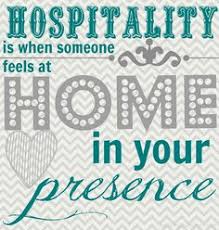
Today's devotion challenges us to think about our understandings of hospitality. Hospitality is good, right? Opening our doors, inviting "the poor, the crippled, the lame, and the blind," is what Jesus wants, isn't it? And isn't that what churches do, as exemplified by many examples given in these devotions? Well, yes, but the Rev. Teresita Valeriano challenges us to take this a step further. If the powerful (the haves) simply feed the powerless (the have nots), what really changes? The powerless are fed, which is a good thing, but they will need to come back the next day, and the next, and so on, if nothing else changes. Rev. Valeriano suggests we need not only to share our food, but ourselves, giving up our exclusive attitudes for the sake of the other. She quotes Sister Joan Chittester who writes, "Hospitality means we take people into the space that is our lives and our minds and our hearts and our work and our efforts. Hospitality is the way we come out of ourselves. It is the first step toward dismantling the barriers of the world. Hospitality is the way we turn a prejudiced world around, one heart at a time." Rev. Valeriano concludes, "A good host invites not only because there is food to share but because there is power to share. Are we ready to do so?" Challenging thoughts, indeed.

Sunday, March 20, 2016
Palm Sunday
28 After he had said this, he went on ahead, going up to Jerusalem.
29 When he had come near Bethphage and Bethany, at the place called the Mount of Olives, he sent two of the disciples, 30 saying, “Go into the village ahead of you, and as you enter it you will find tied there a colt that has never been ridden. Untie it and bring it here. 31 If anyone asks you, ‘Why are you untying it?’ just say this, ‘The Lord needs it.’” Luke 19:28-40
Throughout Lent we've been thinking about hunger, the poor, and poverty. Where did Jesus fall on the socioeconomic scale while he was on earth? Well, we know in terms of material possessions, he didn't have much. He was largely provided for by others. In last Sunday's lesson, he was fed at the home of Lazarus. He stayed with others. He traveled on foot. In today's reading, as he approaches Jerusalem, he sends the disciples ahead to borrow a colt for his ride into Jerusalem. He will eat the Passover meal in an "Upper Room" that an unnamed owner provided. And yet, this man who had very little, was honored as a king as he rode into Jerusalem on the donkey. Kings have palaces and horses and armies and robes and servants! Jesus had none of these, and yet they called him king. Perhaps they hoped he would be this kind of powerful king and free them from the Roman occupation. Perhaps some were honoring him for his compassion for the common people, those living on the fringe, the hungry and oppressed among them. But soon we will see this "king" stripped of all power, arrested, and crucified. He will be king, but his kingship will not be of this world. He will reign in heaven and on earth, saving all people, rich and poor alike.

29 When he had come near Bethphage and Bethany, at the place called the Mount of Olives, he sent two of the disciples, 30 saying, “Go into the village ahead of you, and as you enter it you will find tied there a colt that has never been ridden. Untie it and bring it here. 31 If anyone asks you, ‘Why are you untying it?’ just say this, ‘The Lord needs it.’” Luke 19:28-40
Throughout Lent we've been thinking about hunger, the poor, and poverty. Where did Jesus fall on the socioeconomic scale while he was on earth? Well, we know in terms of material possessions, he didn't have much. He was largely provided for by others. In last Sunday's lesson, he was fed at the home of Lazarus. He stayed with others. He traveled on foot. In today's reading, as he approaches Jerusalem, he sends the disciples ahead to borrow a colt for his ride into Jerusalem. He will eat the Passover meal in an "Upper Room" that an unnamed owner provided. And yet, this man who had very little, was honored as a king as he rode into Jerusalem on the donkey. Kings have palaces and horses and armies and robes and servants! Jesus had none of these, and yet they called him king. Perhaps they hoped he would be this kind of powerful king and free them from the Roman occupation. Perhaps some were honoring him for his compassion for the common people, those living on the fringe, the hungry and oppressed among them. But soon we will see this "king" stripped of all power, arrested, and crucified. He will be king, but his kingship will not be of this world. He will reign in heaven and on earth, saving all people, rich and poor alike.
Saturday, March 19, 2016
34th day of Lent- Psalm 34:8
"O taste and see that the Lord is good;
happy are those who take refuge in him." Psalm 34:8
How do we "taste and see that the Lord is good?" For me, receiving the Lord's Supper immediately comes to mind. We "taste" the Lord's goodness in the bread and wine. We "see" the Lord's goodness in the elements, as well as in the faces of all those who join in the supper. But today's devotion suggests another way to "taste and see that the Lord is good." Rev. Wyvetta Bullock describes a ministry of Bethel Lutheran Church on Chicago's west side. Every third Saturday the church opens its doors to the community to serve a meal to those who need it. They've joined with other congregations who do the same on the other weekends of the month. The ministry is called, "Taste and See." In providing a meal at no cost to the hungry, these congregations are showing the community that "the Lord is good." They are being a witness to God's compassion and what it means to be a Christian. As a result, some of those fed come to a Tuesday night service the church offers. Others come to Sunday morning worship. Presumably, some of those who attend worship receive the Lord's Supper as well. The goodness of the Lord comes full circle. A meal is shared that feeds the body, and a meal is shared that feeds the soul. "O taste and see that the Lord is good. Happy are those who take refuge in him!"

happy are those who take refuge in him." Psalm 34:8
How do we "taste and see that the Lord is good?" For me, receiving the Lord's Supper immediately comes to mind. We "taste" the Lord's goodness in the bread and wine. We "see" the Lord's goodness in the elements, as well as in the faces of all those who join in the supper. But today's devotion suggests another way to "taste and see that the Lord is good." Rev. Wyvetta Bullock describes a ministry of Bethel Lutheran Church on Chicago's west side. Every third Saturday the church opens its doors to the community to serve a meal to those who need it. They've joined with other congregations who do the same on the other weekends of the month. The ministry is called, "Taste and See." In providing a meal at no cost to the hungry, these congregations are showing the community that "the Lord is good." They are being a witness to God's compassion and what it means to be a Christian. As a result, some of those fed come to a Tuesday night service the church offers. Others come to Sunday morning worship. Presumably, some of those who attend worship receive the Lord's Supper as well. The goodness of the Lord comes full circle. A meal is shared that feeds the body, and a meal is shared that feeds the soul. "O taste and see that the Lord is good. Happy are those who take refuge in him!"
Friday, March 18, 2016
33rd day of Lent- John 12:1-8
4 But Judas Iscariot, one of his disciples (the one who was about to betray him), said, 5 “Why was this perfume not sold for three hundred denarii and the money given to the poor?” 6 (He
said this not because he cared about the poor, but because he was a
thief; he kept the common purse and used to steal what was put into it.)
7 Jesus said, “Leave her alone. She bought it so that she might keep it for the day of my burial. 8 You always have the poor with you, but you do not always have me.”
John 12:4-8
Obviously, Judas had impure motives when he criticized Mary for using her expensive perfume to anoint the feet of Jesus. Had the perfume been sold, the proceeds would have gone into the common purse, which meant more money for Judas to skim for himself from that purse. But the question he raises, "could not that money have been better used by giving it to the poor?" is a common one. "Why did you take those kids on that mission trip? Could not that money have been better used by giving it to the poor?" "Why did you buy that new silver communion set? Could not that money have been better used by giving it to the poor?" These are good questions that make us think about being good stewards of the resources God has given us. But Jesus does not agree with Judas' criticism. As Bishop Holmerud says in today's devotion, "Jesus invites Judas Iscariot (and us) to see Mary and her act of love and hospitality in a new light." Those mission trips I've been on can be life changing, both for myself and the youth. The cost of the trip pays dividends down the road as a whole group of people see the world differently, see the needs in a new light, and give their time, talents, gifts, and prayers to help others in need. And how do you place a value on a communion set, which holds Christ's body and blood, giving renewed strength to so many to serve God in the world? In Mary's extravagant act of devotion, she models for us generosity for those in need. May our eyes be opened to new ways of seeing, and new ways of giving, so that God's love may be poured out into the world.

John 12:4-8
Obviously, Judas had impure motives when he criticized Mary for using her expensive perfume to anoint the feet of Jesus. Had the perfume been sold, the proceeds would have gone into the common purse, which meant more money for Judas to skim for himself from that purse. But the question he raises, "could not that money have been better used by giving it to the poor?" is a common one. "Why did you take those kids on that mission trip? Could not that money have been better used by giving it to the poor?" "Why did you buy that new silver communion set? Could not that money have been better used by giving it to the poor?" These are good questions that make us think about being good stewards of the resources God has given us. But Jesus does not agree with Judas' criticism. As Bishop Holmerud says in today's devotion, "Jesus invites Judas Iscariot (and us) to see Mary and her act of love and hospitality in a new light." Those mission trips I've been on can be life changing, both for myself and the youth. The cost of the trip pays dividends down the road as a whole group of people see the world differently, see the needs in a new light, and give their time, talents, gifts, and prayers to help others in need. And how do you place a value on a communion set, which holds Christ's body and blood, giving renewed strength to so many to serve God in the world? In Mary's extravagant act of devotion, she models for us generosity for those in need. May our eyes be opened to new ways of seeing, and new ways of giving, so that God's love may be poured out into the world.
Thursday, March 17, 2016
32nd day of Lent- 1 Thessalonians 5:16-19
"16 Rejoice always, 17 pray without ceasing, 18 give thanks in all circumstances; for this is the will of God in Christ Jesus for you. 19 Do not quench the Spirit." 1 Thessalonians 5:16-19
How often do we sit down for a meal, gulp it down, and then move on to the next thing on our to do list? Far too often, I'm afraid. We take the food for granted, and treat it as if it's nothing more than fuel for our bodies, like putting gas in the automobile tank. Bishop Gonia reminds us of some important things in today's devotion. First, as it says in 1 Thessalonians, "give thanks." This food is a gift of God, and many struggle just to have a meal. But in addition to giving thanks for the food, also give thanks "for hands that have labored in ways seen and unseen for the sake of taking part in God's bounty." This could include farmers, ranchers, scientists who help develop food products, those that harvest, workers in meat packing plants, truck drivers who transport food, grocery store workers, and cooks, to name just a few. Within that chain, also remember that some who brought food to our tables are working in low paying jobs, "some of whom themselves are dealing with the impact of poverty in their lives." This is a humbling thought. And then he suggests that we include a petition for those who do struggle for daily bread. "I ask that we might be moved as Christ's hands of healing and hope in the world, so that no one will go hungry and all will be filled." As you sit down at the table for a meal today, perhaps try offering a prayer of thanks as Bishop Gonia suggests. It reminds us that there are "a grand cast of characters" who have brought this food to us, to be grateful, and to not take our daily bread for granted.
How often do we sit down for a meal, gulp it down, and then move on to the next thing on our to do list? Far too often, I'm afraid. We take the food for granted, and treat it as if it's nothing more than fuel for our bodies, like putting gas in the automobile tank. Bishop Gonia reminds us of some important things in today's devotion. First, as it says in 1 Thessalonians, "give thanks." This food is a gift of God, and many struggle just to have a meal. But in addition to giving thanks for the food, also give thanks "for hands that have labored in ways seen and unseen for the sake of taking part in God's bounty." This could include farmers, ranchers, scientists who help develop food products, those that harvest, workers in meat packing plants, truck drivers who transport food, grocery store workers, and cooks, to name just a few. Within that chain, also remember that some who brought food to our tables are working in low paying jobs, "some of whom themselves are dealing with the impact of poverty in their lives." This is a humbling thought. And then he suggests that we include a petition for those who do struggle for daily bread. "I ask that we might be moved as Christ's hands of healing and hope in the world, so that no one will go hungry and all will be filled." As you sit down at the table for a meal today, perhaps try offering a prayer of thanks as Bishop Gonia suggests. It reminds us that there are "a grand cast of characters" who have brought this food to us, to be grateful, and to not take our daily bread for granted.
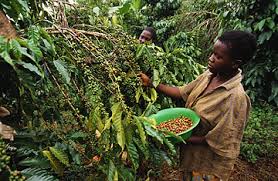
Harvesting coffee beans for our morning coffee!
Wednesday, March 16, 2016
31st day of Lent- Matthew 13:3-9
3 And he told them many things in parables, saying: “Listen! A sower went out to sow. 4 And as he sowed, some seeds fell on the path, and the birds came and ate them up. 5 Other
seeds fell on rocky ground, where they did not have much soil, and they
sprang up quickly, since they had no depth of soil. 6 But when the sun rose, they were scorched; and since they had no root, they withered away. 7 Other seeds fell among thorns, and the thorns grew up and choked them. 8 Other seeds fell on good soil and brought forth grain, some a hundredfold, some sixty, some thirty. 9 Let anyone with ears[a] listen!” Matthew 13:3-9
Today's devotion by Bishop Bill Gafkjen is a prayer based on the above parable. In his prayer he acknowledges within himself he is all of the soils. "I am a hard worn path." "Thorns infest my best intentions." "The seeds of life you offer bounce off me again and again. I get excited about helping those who hunger and hurt, but the passion withers when the going gets tough." How true that is for all of us. If it were all dependent upon our efforts, what seeds would ever take root? But it's not about us. It's about Jesus. It's about Jesus, himself the seed, "who gathers up what makes (the path) hard and takes it to a cross planted in the thin soil of Calvary." In other words, he takes our sins, all of our shortfalls, to the cross. There he dies for all those things, and, in the wonder of grace, "this seed rises from the rocky ground of an empty tomb to offer new, abundant and lasting life for me and for all." That's the gospel. That's the good news that, despite our hard worn, rocky, thorn choked hearts, God loves us, forgives us, and calls us to be sowers of seeds of healing and hope.


Today's devotion by Bishop Bill Gafkjen is a prayer based on the above parable. In his prayer he acknowledges within himself he is all of the soils. "I am a hard worn path." "Thorns infest my best intentions." "The seeds of life you offer bounce off me again and again. I get excited about helping those who hunger and hurt, but the passion withers when the going gets tough." How true that is for all of us. If it were all dependent upon our efforts, what seeds would ever take root? But it's not about us. It's about Jesus. It's about Jesus, himself the seed, "who gathers up what makes (the path) hard and takes it to a cross planted in the thin soil of Calvary." In other words, he takes our sins, all of our shortfalls, to the cross. There he dies for all those things, and, in the wonder of grace, "this seed rises from the rocky ground of an empty tomb to offer new, abundant and lasting life for me and for all." That's the gospel. That's the good news that, despite our hard worn, rocky, thorn choked hearts, God loves us, forgives us, and calls us to be sowers of seeds of healing and hope.
Tuesday, March 15, 2016
30th day of Lent- Mark 12:28-31
28 One of the
scribes came near and heard them disputing with one another, and seeing
that he answered them well, he asked him, “Which commandment is the
first of all?” 29 Jesus answered, “The first is, ‘Hear, O Israel: the Lord our God, the Lord is one; 30 you
shall love the Lord your God with all your heart, and with all your
soul, and with all your mind, and with all your strength.’ 31 The second is this, ‘You shall love your neighbor as yourself.’ There is no other commandment greater than these.” Mark 12:28-31
When Jesus is asked by one of the scribes which of the many commandments in the law was first in priority, he names two. In doing do, he combines them into one, the greatest of all. To put it simply, love God and love your neighbor. It sounds easy enough, but is so much harder to put into practice. What does it mean to love God with all your heart, soul, mind, and strength? It must mean loving God with everything you have, your whole self, all the time. I wish I could say I always do that, but there are many times I get distracted and my full attention is elsewhere. And what about loving my neighbor as myself? Sister Liz in today's devotion fleshes this out by writing, "Loving our neighbor means knowing them, listening to them, accompanying them, striving together for the benefit of others, sharing ourselves with them and being open to noticing God in them." To truly love the neighbor is to "engage in loving relationships" with those around us, especially those "experiencing hunger, poverty, loneliness, inequity, oppression, and injustice..." That's quite a challenge. We can't engage everyone in that way. But who can we engage? Who do we know that needs us to be that person to accompany and love them at this time?

When Jesus is asked by one of the scribes which of the many commandments in the law was first in priority, he names two. In doing do, he combines them into one, the greatest of all. To put it simply, love God and love your neighbor. It sounds easy enough, but is so much harder to put into practice. What does it mean to love God with all your heart, soul, mind, and strength? It must mean loving God with everything you have, your whole self, all the time. I wish I could say I always do that, but there are many times I get distracted and my full attention is elsewhere. And what about loving my neighbor as myself? Sister Liz in today's devotion fleshes this out by writing, "Loving our neighbor means knowing them, listening to them, accompanying them, striving together for the benefit of others, sharing ourselves with them and being open to noticing God in them." To truly love the neighbor is to "engage in loving relationships" with those around us, especially those "experiencing hunger, poverty, loneliness, inequity, oppression, and injustice..." That's quite a challenge. We can't engage everyone in that way. But who can we engage? Who do we know that needs us to be that person to accompany and love them at this time?
Subscribe to:
Posts (Atom)